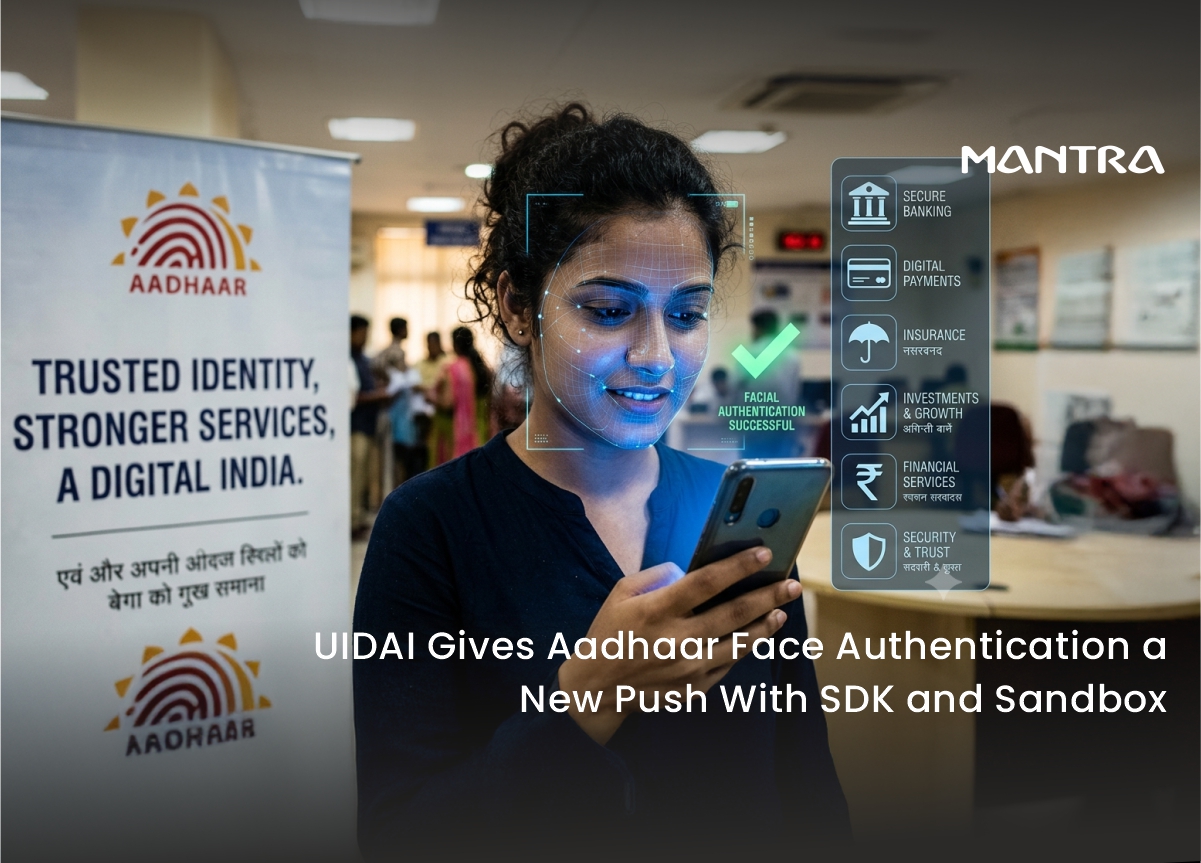
At the Global Fintech Fest 2026 held at the Jio World Centre in Mumbai on September 9, 2026, the Unique Identification Authority of India (UIDAI) introduced two major software tools: the Aadhaar Face Authentication Software Development Kit (SDK) and the Aadhaar Face Authentication Sandbox.
These tools were built to fix a specific everyday problem for Indian citizens and financial businesses: the forced reliance on an extra mobile application just to verify a user's face.
The Problem With How Face Verification Worked Until Now
Aadhaar verification has grown rapidly across India. According to UIDAI Chairman Neelkanth Mishra, India currently processes 10 crore Aadhaar authentications every single day - up from roughly 7 crore daily transactions a few years ago. UIDAI is now preparing its backend systems to handle 25 to 30 crore daily authentications across more than 600 active entities. Furthermore, since its launch in 2021, UIDAI's AI-based face verification system has crossed 500 crore total transactions across public services like Jeevan Pramaan, PM Kisan, and Ayushman Bharat.
However, private banks and fintech platforms faced a significant user drop-off issue during customer registration. Whenever a bank, insurance company, or government department needed to verify a customer's face for Reserve Bank of India (RBI) multi-factor authentication, they had to rely on a separate app built by UIDAI called Aadhaar FaceRD.
Customers had to leave their banking app, go to the app store, download the separate Aadhaar FaceRD application, and then switch back to complete their registration. This extra step caused technical errors, interrupted the sign-up process, and forced users to keep an extra app on their smartphones. Many customers simply abandoned their account registration mid-way.
What is the Aadhaar Face Authentication SDK?
SDK stands for Software Development Kit. It is a pre-built set of code and software files that UIDAI gives directly to licensed banks, fintech companies, and government departments.
Instead of sending a customer to download the separate Aadhaar FaceRD app, the Aadhaar Face Authentication SDK allows a bank's software engineers to build UIDAI's face-scanning camera directly inside their own Android or iOS mobile application. For the customer, the entire verification happens inside the single app they are already using.
From a security standpoint, the SDK handles data encryption automatically and includes a built-in liveness detection system. This system checks if a real, living person is in front of the smartphone camera, blocking fraudsters who try to hold up a printed photo or play a pre-recorded video on another screen.
What is the Aadhaar Face Authentication Sandbox?
A Sandbox is an isolated, offline testing environment for software developers. Before a bank launches a new feature to millions of customers, its engineers need a safe place to test the code without touching real customer data or connecting to live government servers.
Previously, testing Aadhaar face verification was difficult for private companies because they had to go through lengthy compliance approvals just to run basic technical trials. The Aadhaar Face Authentication Sandbox allows app developers to test how their app handles face capture, user consent screens, and technical failures - such as poor internet connections, server timeouts, invalid digital signatures, or fake photo attempts - before going live.
Financial firms Motilal Oswal Financial Services Limited and Poonawalla Fincorp served as the early testers for this Sandbox, validating the system before UIDAI opened it up to the wider banking and financial sector.
Why This Matters for Banks and Citizens
Looking closely at this release reveals three practical shifts in how digital identity works in India:
After removing the third-party app requirement and giving companies a direct way to test and embed face scanning, UIDAI has made digital verification simpler to build for engineers and much faster to use for the public.
Comments