Introduction
The modern university campus is evolving faster than ever. Students expect frictionless access, digital workflows, and seamless safety, not long queues, ID cards, or manual attendance sheets. Administrators, meanwhile, face pressure to modernize operations while safeguarding privacy and inclusion.
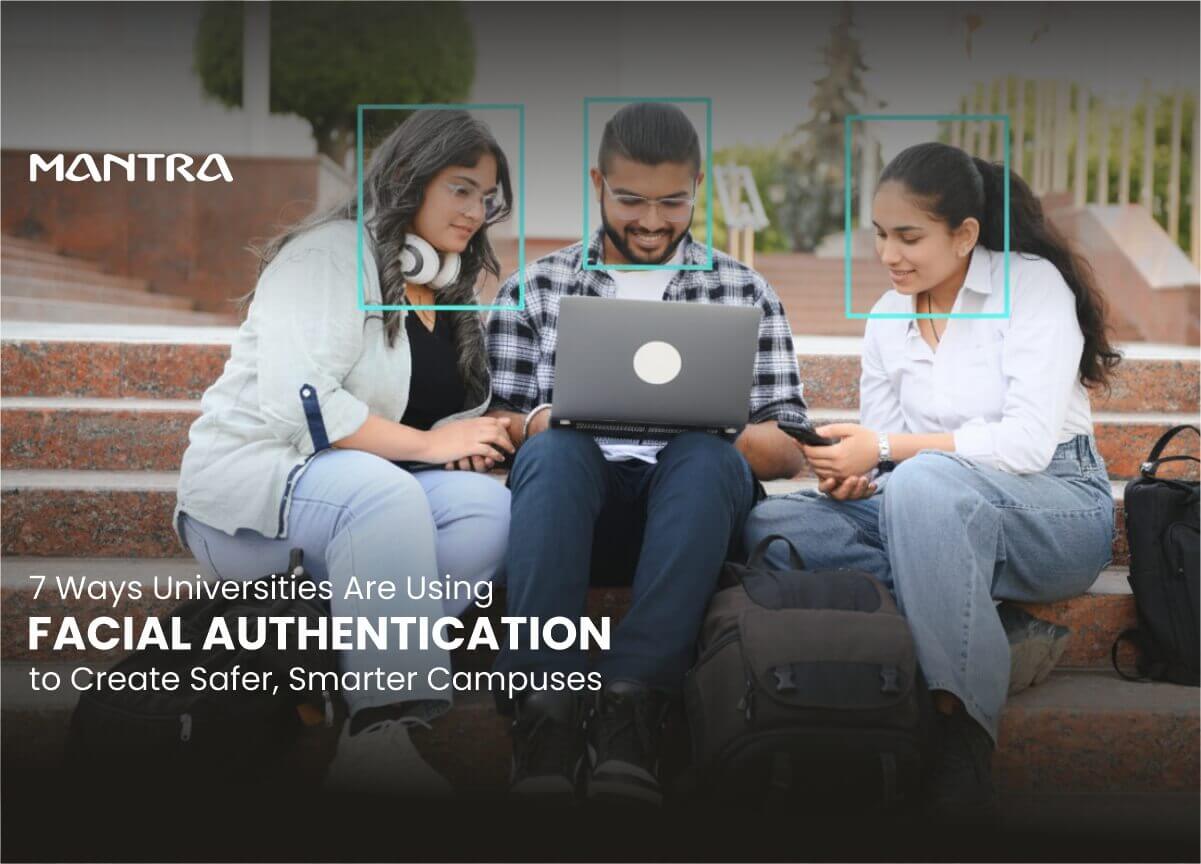
Facial authentication is emerging as the solution that addresses both needs. By combining physical and digital security, it eliminates repeated manual verification, reduces reliance on cards and passwords, and allows campuses to keep students safe while maintaining operational efficiency. From faster building entry to cashless campus payments, universities are adopting biometrics to create smarter, safer, and more convenient campuses.
Here are seven impactful ways universities are implementing facial authentication with real-world examples from recent deployments.
7 Modern Uses of Facial Authentication in Universities Today
-
Frictionless Entry to Buildings and Facilities
Long queues at campus gates are becoming a thing of the past. Students can now enter hostels, libraries, labs, exam halls, and sports facilities through facial recognition systems that verify them automatically.
This eliminates tailgating, lost or shared ID cards, and bottlenecks at entry points.
Real-world examples:
Acre Security deployed unified biometric and digital credentials at University of Virginia, George Mason University, and Rockhurst University in 2025, covering tens of thousands of students.
A U.S. public university adopted SAFR facial-recognition devices across campus entrances, enabling contactless pedestrian and vehicle entry.
-
Automated Student Attendance Without Roll Calls
Classroom attendance no longer needs manual roll calls or touch-based biometric systems. Cameras can automatically record students as they take their seats, marking presence in real time.
Benefits include:
Reduced proxy attendance
Less faculty burden
More teaching time, less paperwork
Example:
The National Institute of Business Management (NIBM) in Sri Lanka integrated facial recognition for attendance tracking and access control, reporting high accuracy and eliminating traditional physical passes.
-
Smart Hostel & Dormitory Access Control
Dormitories are sensitive security zones. Facial authentication ensures only authorized residents enter residential blocks, even if ID cards are lost or stolen.
Pre-registered visitors can receive one-time facial access, eliminating the need for logbooks or manual checks.
Entry logs provide a digital audit trail of every person entering sensitive areas.
-
Digital Exam Authentication and Anti-Impersonation
Exam impersonation has long challenged universities. Facial verification ensures that the registered student is the one taking the test.
It works at exam gates and computer-based test centers.
Removes friction while protecting academic integrity.
Example:
Research universities such as Tuskegee University are implementing AI-enabled “smart access” systems as part of broader campus security upgrades, including facial authentication
-
Cashless and Card-less Campus Payments
Facial authentication can extend beyond access:
Canteens, libraries, bookstores, vending machines, and printing kiosks can accept face-linked payments.
Students don’t need wallets, cards, or apps; transactions are deducted automatically from linked wallets or accounts.
This creates faster, safer, and fully digital campus experiences.
-
Visitor, Staff, and Vendor Identity Management
Campuses often host vendors, contract staff, exam invigilators, or external faculty. Facial authentication brings everyone into a centralized digital access system:
Tracks who is on campus, where they are authorized to be, and when.
Reduces dependency on manual gate logs.
Supports audit trails and compliance.
-
Enhanced Campus Safety with Real-Time Alerts
Facial authentication also enables live safety monitoring.
Flagged students, banned visitors, or security risks trigger instant alerts.
Administrators can act proactively, moving from reactive to predictive security.
Integrates with broader smart-campus infrastructure and IoT-enabled systems.
Also Read - Biometrics in Elearning Identity Security
Why Universities Are Adopting Facial Authentication Now
Several factors are driving rapid adoption:
Operational efficiency and modern campus expectations:
AI-driven security and automated identity verification align with "smart campus" initiatives.
Security and anti-fraud:
Biometric credentials reduce the risk of stolen, shared, or forged IDs.
Scalability:
Contactless facial recognition handles large student populations efficiently, from cafeterias to libraries.
Unified credentialing and convenience:
ID cards, mobile apps, and biometric credentials merge into a single system, simplifying access.
Emerging Concerns and Pushback
Despite its benefits, facial recognition adoption is not without challenges:
Privacy and consent: Students at Jawaharlal Nehru University (JNU) protested library facial recognition deployments due to lack of transparency.
Data governance: Institutions must clarify how data is stored, who has access, and how long it is retained.
Ethical considerations: Security vs. trust and privacy remains a delicate balance.
Universities must communicate clearly and implement ethical, privacy-respecting policies to gain stakeholder acceptance.
Also Read - Anti Spoofing National Id Programs Implementation Guide
Final Thoughts
Facial authentication is actively transforming campus life. From seamless building entry and automated attendance to cashless payments and predictive safety alerts, universities are leveraging biometrics to create smarter, safer, and more efficient campuses.
But adoption requires transparency, clear consent, and responsible data management. When implemented ethically, facial recognition can become a cornerstone of modern campus operations, enhancing safety, efficiency, and student experience simultaneously.
Comments