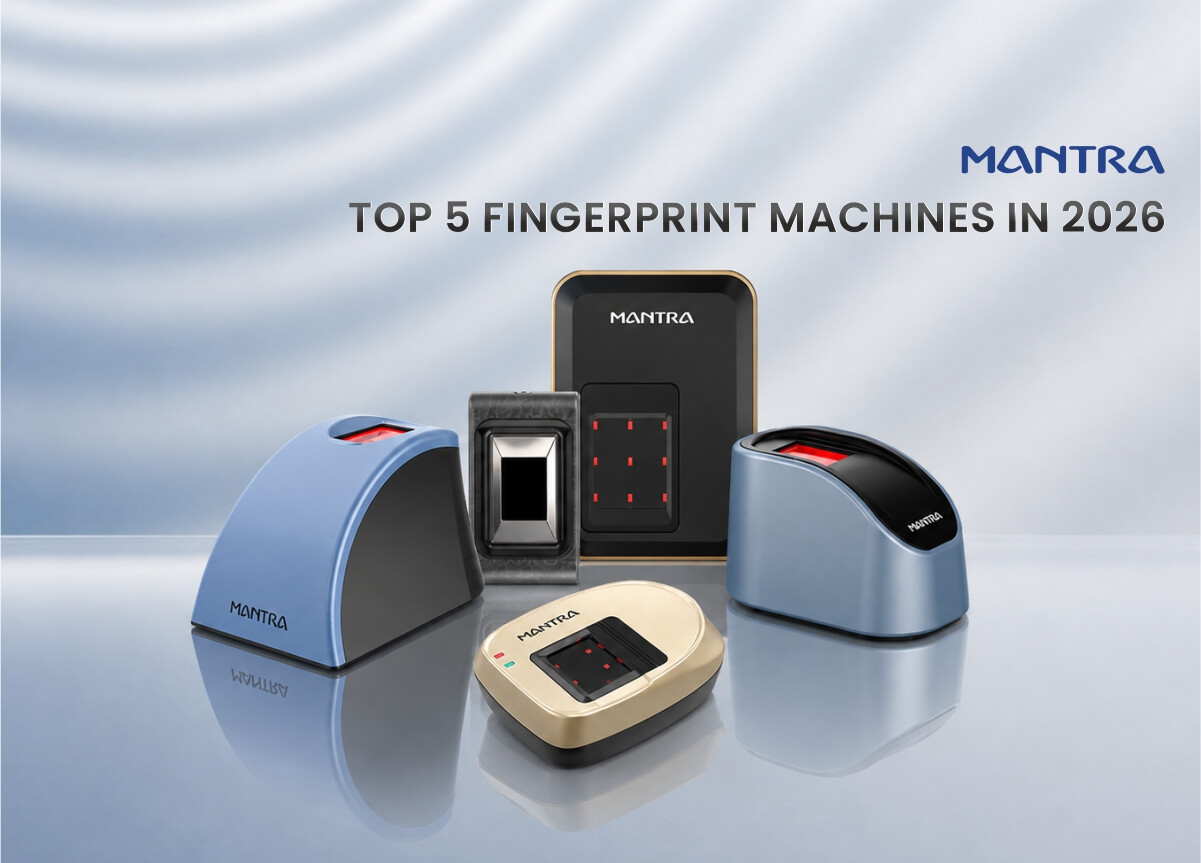
While biometric fingerprint scanners utilize various technologies worldwide, including ultrasonic and multispectral, the five devices in this guide utilize either capacitive or optical sensors. Choosing the right scanner for your deployment means evaluating them across four main pillars: sensor technology, capture area, industry certifications, and security architecture.
For many government and enterprise applications, key requirements include FBI Appendix F certification and its associated Fingerprint Acquisition Profile (FAP). Additionally, for Aadhaar-linked deployments in India, the device's UIDAI security architecture (such as L0 or L1 compliance) is a critical factor.
This guide breaks down five fingerprint devices by these exact specifications so you can accurately match a scanner to your compliance and integration needs.
Quick Comparison Table
| Model | Sensor Type | Capture Profile | Certifications / Compliance | Best For |
|---|---|---|---|---|
| MARC11 | Capacitive | FAP10 | STQC, UIDAI L1 | OEM integration, handhelds |
| MELO20 | Optical | FAP20 | FBI PIV, WBF | Access control, attendance |
| MELO31 | Optical | FAP30 | FBI PIV, MOSIP SBI | National ID, civil enrollment |
| MFS500 | Optical | FAP10 | FBI PIV, STQC (MX variant) | Enterprise, embedded systems |
| MFS110 | Optical | FAP10 | FBI PIV, STQC L1, UIDAI L1 | Aadhaar eKYC, L1 deployments |
5. MARC11:
Capacitive Fingerprint Sensor for OEM Integration
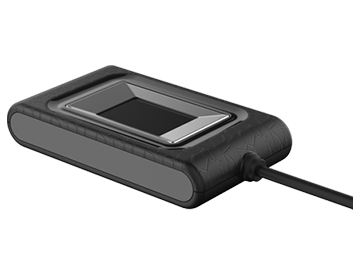
The MARC11 is a capacitive fingerprint scanner built primarily for original equipment manufacturers. Instead of an LED and glass platen, it relies on an array of micro-capacitors to read the electrical difference between ridges and valleys.
The core module measures just 35 x 23 x 5 mm. Its low power footprint makes it highly suitable for integration into mobile POS systems and battery-powered access terminals. Crucially, it carries STQC and UIDAI L1 compliance, meaning it meets the architectural requirements for Aadhaar-linked authentication ecosystems. Biometric data is secured within the scanner’s Trusted Execution Environment (TEE) before exiting the module.
4. MELO20:
FAP20 Optical Fingerprint Device
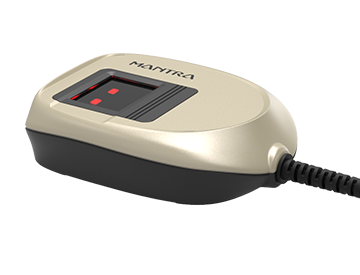
The MELO20 utilizes a FAP20-compliant optical sensor. Compared to a FAP10 profile, this provides a larger physical capture area, which can capture more fingerprint detail in a single acquisition.
Built for environments like physical access control and high-volume biometric attendance systems, the MELO20 is IP65 rated against dust and water jets. It connects over USB 2.0 for standard desktop deployments, while raw module versions offer SPI and UART interfaces for custom terminal integrators.
3. MELO31:
FAP30 Optical Scanner for Civil ID
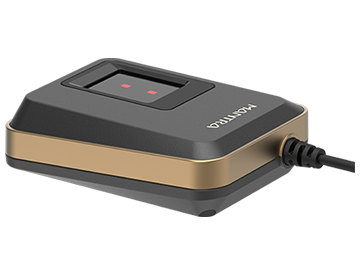
The MELO31 features a FAP30-compliant sensor, giving it the largest flat fingerprint capture area in this specific lineup. Its larger capture area is intended to capture more fingerprint detail in a single acquisition, which is often a requirement for older applicants, manual laborers, or user populations with worn ridge details.
Beyond its size, the MELO31 is positioned for MOSIP-based deployments (Modular Open Source Identity Platform). It supports hardware-based signing and secure boot with over-the-air firmware update capabilities, making it a rugged, IP65-rated option for field enrollments and civil identity programs.
2. MFS500 Series:
Optical Scanners for Enterprise and Embedded Use
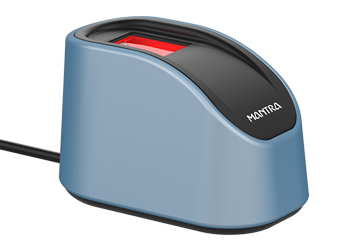
The MFS500 line is not a single device but a family built around the MOPv2.0 optical sensor (FAP10 profile).
Because compliance needs vary wildly by industry, Mantra branches this device into three distinct SKUs:
| Feature | MFS500 (Base) | MFS500-MX |
|---|---|---|
| Product Image | 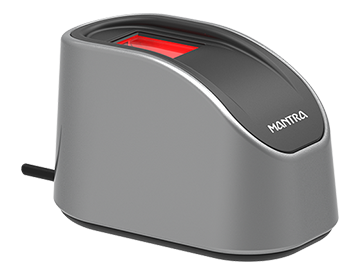 |
 |
| Primary Certification | FBI PIV | FBI PIV, STQC, MOSIP SBI |
| Security Architecture | Standard | TEE/SEE Secure Memory |
| Interface | USB 2.0 | USB 2.0 |
| Notable Addition | N/A | On-board Crypto Engine |
| Target Use Case | Enterprise access, PC login | Govt eKYC, welfare distribution |
| Product Details | View MFS500 Details | View MFS500 MX Details |
1. MFS110:
The L1 UIDAI-Compliant Flagship
The MFS110 is an L1-certified device designed strictly around secure architecture requirements.
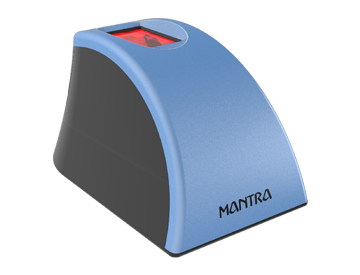
In an L1 architecture, biometric data is secured within the device before being passed to the host, reducing the exposure of raw biometric information on the host system. The fingerprint is captured and encrypted inside the scanner's own secure hardware (utilizing a hardware TRNG and Trusted Execution Environment) before anything reaches the connected PC or mobile device.
The MFS110 meets both FBI PIV-071006 and STQC L1 standards, generating output that follows ISO 19794-2 (minutiae) and ISO 19794-4 (image) wrapped in encrypted PID blocks as required by UIDAI.
Which Fingerprint Scanner Do You Need?
If you are building a scanner into an OEM product, the capacitive MARC11 module is compact enough (35 x 23 x 5 mm) making it suitable for integration into handheld POS devices, smart card readers, and battery-powered terminals.
If you are deploying an attendance machine or access control terminal, the MELO20 features a FAP20 capture profile intended for consistent daily office or factory check-ins.
If you are running a civil ID or MOSIP enrollment program that requires accommodating larger finger sizes or degraded ridge detail, the MELO31 provides the widest flat capture area in this lineup.
If you need modularity across enterprise and embedded environments, the MFS500 series branches into specific variants for basic enterprise, government eKYC, or Presentation Attack Detection (PAD).
If your deployment mandates UIDAI's L1 security standard and the biometric data must be secured within the device before being passed to the host system, then the MFS110 is engineered specifically for this architecture.
Comments