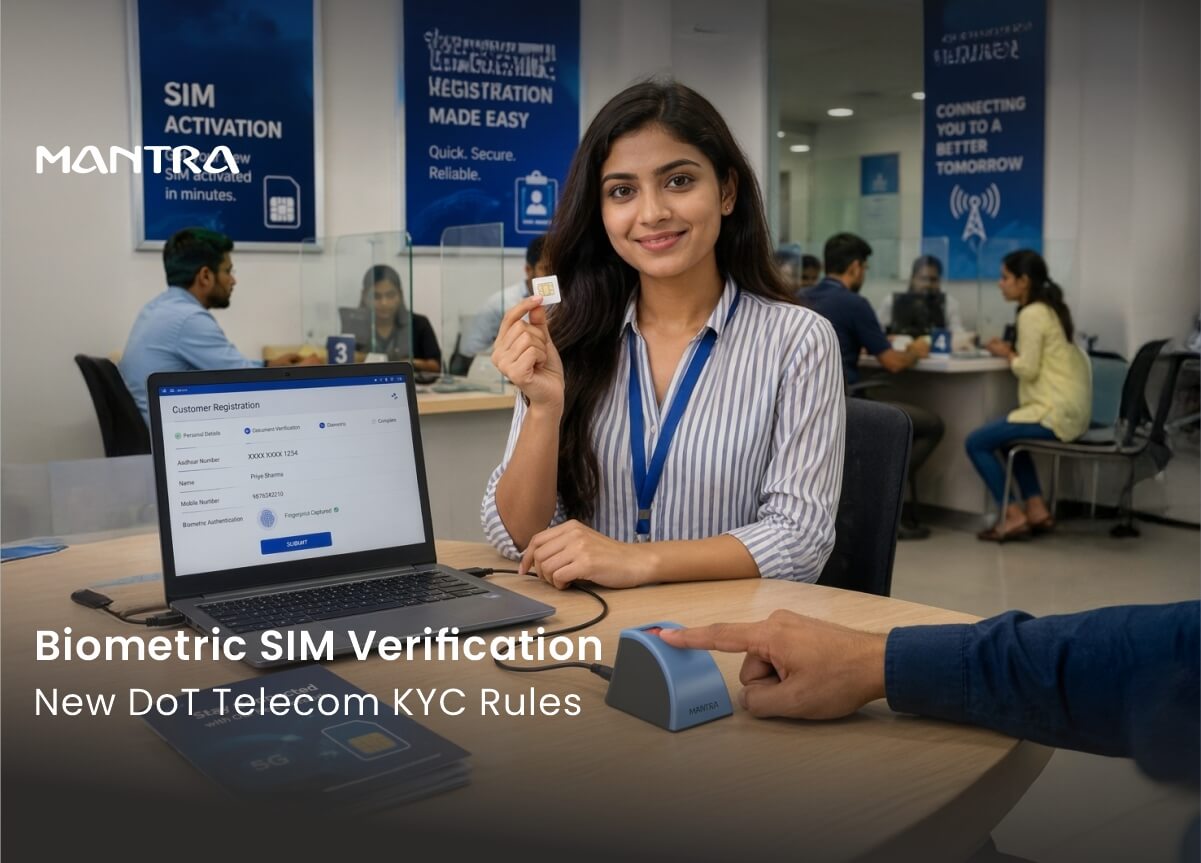
Key Points
What are the new DoT Telecom KYC Rules?
India's biometric SIM verification requirements changed with the Telecommunications (User Identification) Rules, 2026. The Department of Telecommunications (DoT) notified the Rules on 21 August 2026, making biometric-based identification mandatory before enrolment for specified mobile services. The Rules are already in force. Authorised entities have until 21 November 2026 to establish the technical and organisational infrastructure needed to implement them, unless the Government extends that period.
The legal requirement has commenced; the infrastructure deadline is approaching. Rule 10(6) allows the Government to grant a further extension of up to three months, but operators should verify any such notification before relying on it.
The scale of suspicious connections gives this change its context. As of 15 July 2026, DoT's Artificial Intelligence and Big Data Analytics tool (ASTR) had identified more than 88 lakh mobile connections that were disconnected after failing re-verification.
Making Biometric Identification Part Of Mobile Enrolment
The Central Government notified two services under the Telecommunications Act, 2023 for verifiable biometric-based identification:
For these services, Rule 3 of the User Identification Rules requires an authorised entity to identify a user biometrically before enrolling them for a connection or SIM. The requirement also applies before specified updates to user information, before processing a disconnection request and when DoT directs re-verification.
The Rules cover authorised entities holding a new authorisation, entities that have migrated to the new authorisation terms, and legacy licensees that have elected to continue under their existing licence terms.
The Rules provide two routes for identification:
Aadhaar e-KYC
An Aadhaar number holder completes biometric identification through the Aadhaar electronic Know Your Customer (e-KYC) process.
Digital KYC (D-KYC)
A person who does not hold Aadhaar, or cannot complete e-KYC because live biometric authentication is not possible, follows the D-KYC process.
D-KYC requires live face capture, user information and electronic images of original identity and address documents. The authorised entity must compare the live face with the person and the face shown in the submitted documents. It must also verify that the document images match the originals presented.
The rules provide an accessible alternative for a user who cannot undergo live face capture because of impairment, disfigurement or injury. The authorised entity must offer another biometric route in such cases.
What The November Deadline Means
Rule 10(6) gave authorised entities three months from 21 August 2026 to establish the infrastructure and implement the technical and organisational measures needed to comply. That period ends on 21 November 2026. The Government may extend it by a further period of up to three months after assessing the entities' preparedness.
The three-month provision does not change the date on which the Rules came into force. Operators should treat the biometric identification requirement as an active regulatory obligation and confirm the status of any extension or implementation direction with DoT.
Aadhaar Authentication and Aadhaar E-KYC Return Different Information
A standard Aadhaar authentication transaction returns a digitally signed Yes or No response from the Unique Identification Authority of India (UIDAI). An e-KYC transaction returns a digitally signed response containing the permitted KYC information, which can include demographic details and a photograph.
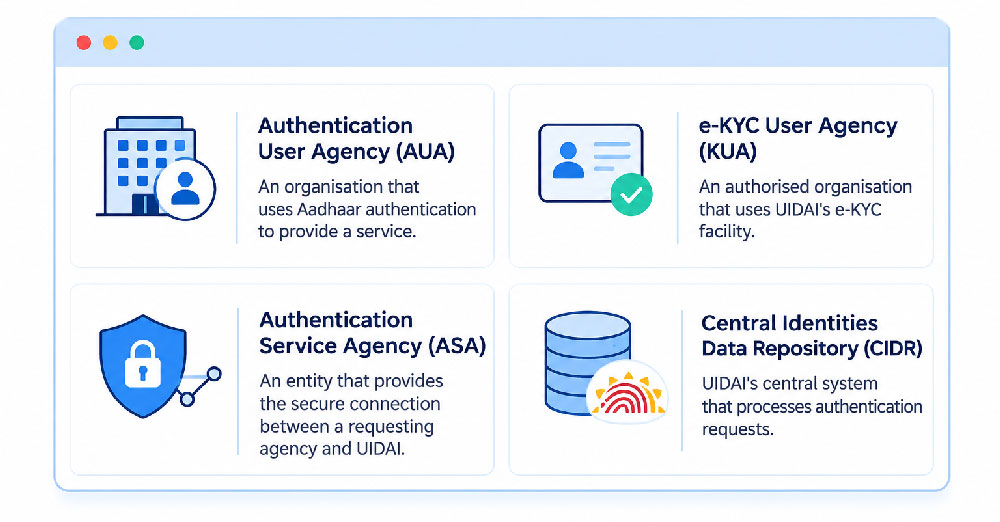
An AUA or KUA sends the authentication request through an ASA to UIDAI's CIDR. UIDAI processes the request and returns the applicable response. An eligible requesting entity may also perform the ASA role itself.
The 2026 Rules require authorised entities to store and process the e-KYC data received from UIDAI, including the Aadhaar number, along with the user's information in the customer application form and subscriber data record. The handling of that information must follow the applicable security and data-protection requirements.
Business Connections Still Require Identification Of Every End User
DoT discontinued the old Bulk Connections category in its 31 August 2023 KYC instructions and introduced the Business Connections framework. Businesses can still obtain multiple SIM connections, but the process requires the operator to identify the business and establish who will use each connection.
The 2023 instructions required businesses to submit entity documents and details of their end users. The SIMs could not be activated until each end user completed KYC. The framework also included physical verification of business premises, subject to the specified provisions and exemptions.
The 2026 User Identification Rules make the biometric requirement explicit for business connections. The authorised entity must carry out biometric identification of the business's authorised representative and each end user, unless the Central Government grants an applicable exemption.
A business can obtain multiple SIMs, but each end user must be identified before the connection is enrolled under the applicable process.
Comments